

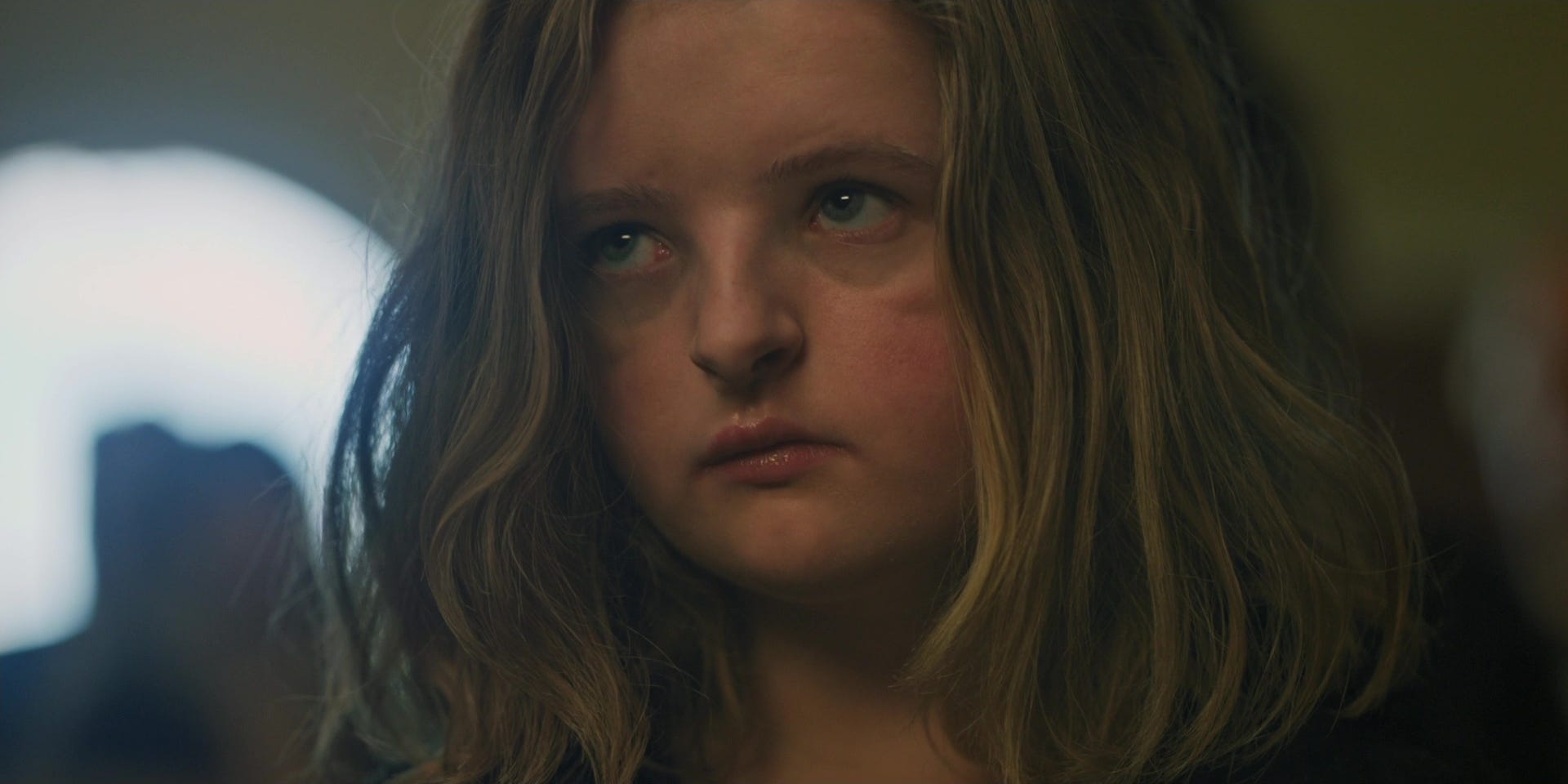
The audience walks into an A24 flick expecting one thing and leaves feeling like something got rearranged inside their guts.
A24 vibes overlap with what we chased on Hannibal. Bryan Fuller understood horror is about more than monsters. It’s about the space around the monster. The pre scream silence. The meal you didn’t ask questions about. These techniques aren’t mysterious. You can learn them. And if you’re scribbling genre, you should be stealing them.
Slow Burning Mystery Box
OG advice says front-load your inciting incident. Hook the audience right away. A24 holds back the obvious event for 30 to 40 percent of the story. For A24, dread can be scarier than shock.
On Lost, we learned this lesson the hard way. Episodes that rushed to the reveal never landed as hard as episodes that let the eerie oddness accumulate. The hatch was just sitting out there, unopened, for weeks. The original dread inspiring mystery box doing tonal heavy lifting.
Make a list of normal scene corruptions. For each early scene, add one small disturbance. Objects out of place. Behavior that lasts one beat too long. Silence where dialogue should be.
Maybe your protagonist sets her keys on the counter in scene one. Scene three, the keys are inexplicably in the refrigerator. Scene five, they’re back on the counter, with slickery slime. No one comments on this. No clear answers. It’s the unknowable pattern that terrifies.
Alt approach: At family dinner one character answers questions half a second late. Later, they answer before the question finishes. Eventually, they answer questions no one asked. WTF?!
If nothing terrifying has happened yet and audiences feel uneasy, you’re in A24 territory.
The Will Graham Trap: When Your Gift Destroys You
Most scripts give protagonists flaws they overcome. A24 gives protagonists wounds that will actively sabotage their choices. The wound’s not separate from the plot. The wound IS the plot.
This was the engine of Hannibal. Will Graham’s mirror-neuro-diverse empathy wasn’t just a character trait. It was the thing that made him vulnerable to Hannibal’s manipulation. His unique strength became an inevitable trap. Every episode, we watched his gift unravel him a bit by bit.
Scribble a one-sentence wound statement: “Because of X, the character cannot do Y when it matters most.“ Then craft scenes where character strength is the reason things get worse.
Track five stages across the story: Denial, Cracks, Collapse, Reckoning, Changed behavior. Note that last one. Changed behavior. Not healing speeches. Not tearful confessions. Behavior.
If your protag is a meticulous planner who survived some childhood chaos. Maybe they schedule every interaction, rehearse every conversation. So if a crisis demands spontaneity, they freeze-up and people get hurt. Their need for control becomes their self-inflicted cage.
If the character’s internal damage causes at least half their plot problems, it’s A24 worthy.
Hannibal’s Sublime Absurdity
A24 flicks rarely shift tone between scenes. They’ll shift tone inside the same moment. Right at the emotional peak.
Fuller talked about “the absurd sublime.“ On Hannibal, we’d have a gorgeous, operatic murder tableaux and then hard cut to Jack Crawford eating a sandwich. Tonal collision made both elements land with maximum impact.
For each major sequence, label surface genre and emotional truth. Let them clash. Horror scene with banal humor. Comedy scene with genuine dread. Add one tonal reversal per act.
During a funeral, a phone could blast a ridiculous ringtone. People laugh, then immediately feel ashamed. That shame will land harder than pure grief.
Or try: A violent stealth confrontation in a kitchen gets interrupted by a smoke detector chirping for a dead battery. The fight continues while someone frantically waves a towel at the ceiling to silence the alarm. The humor heightens the stress instead of defusing it.
If audiences laugh and then feel uneasy about laughing, you’ve hit an A24 bullseye.
Metaphoric Horror Bombs
Most A24 horror flicks are about more than a monster. The monster IS the internal wound of the character’s made visible.
My ADD brain loves layered storytelling. It’s the same principle we used on Heroes with superpowers as metaphors. Claire’s healing factor wasn’t just cool. It was about teenage resilience, about surviving things that should break you. Peter’s power absorption was about identity and codependence. These genre elements carried relatable psychological weight.
Decide what your story is really about in one human sentence. Every genre device you scribble needs to echo that sentence.
If your story is about a man who refuses to grieve his brother. Maybe his house begins to grow extra rooms overnight. But he never explores them. Eventually, the house becomes impossible for him to navigate. The haunting is the guy’s grief avoidance made physical and cinematic.
Alt: A woman with untreated depression discovers a sinkhole opening in her backyard. She fences it off. The fence keeps collapsing. The hole keeps expanding to undermine the house. Nobody needs to say “this is about depression.“ It’s visually obvious and freakin’ undeniable.
If your story still works on the surface but lingers long after, your metaphor is A24 material.
Network TV Made Me a Shouty Scribbler
A24 films are confident. They trust the audience to understand what’s happening on screen without being told. This can be the hardest element to execute and the most rewarding.
During my decades of network scribbling, I was taught viewers needed to understand what was happening even while folding their laundry. The c-suite mandate was for more telling, less showing. Dialog had to convey story even when the audience wasn’t looking at the screen.
Cable and streaming changed that. (Though viewers of the final season of Stranger Things might disagree.) On Hannibal, we would let a look carry what typical network TV would have demanded in a monologue. We trusted the audience to track subtext without having it explained. And none of our studio partners had enough money/skin in the game to tell us to knock it off.
So try going through your draft and highlight every sentence that explains emotion, motive, or backstory. Then rewrite each of these as a physical action, a spatial choice, or a repeated habit. Try cutting at least 20 percent of the blah-blah-blah exposition.
Instead of “He didn’t trust men because of his childhood,“ scribble: He never sits with his back to a door. He chooses aisle seats. He flinches when someone reaches across him.
Instead of saying a house is haunted, show it: The thermostat reads normal. But condensation forms on the inside of windows. A whimpering dog refuses to cross an empty hallway.
If your readers can infer something without being told, leave it unstated for those A24 vibes.
Execution Experiment
– Scribble your wound statement. “Because of ___, my character cannot ___ when it matters.“
– Add three wrong details to Act One. Misplaced objects. Timing errors. Sensory contradictions.
– Add one tonal clash. An absurd interruption during a serious confrontation.
– Cut one telling explanatory paragraph. Replace by showing a repeated action or habit.
– You’ve gotta read your scripts aloud. Cut anything that tells the audience how to feel.
Scribbler’s Takeaway
A24 flicks know who their audiences are, and respect their intelligence. They don’t need to explain. They don’t need to reassure. They need to generate intense pressure through everything that’s unsaid, and what’s wrong, and all the dark stuff the characters can’t face.
It’s true that most A24 flicks are generally lower budget, but these tricks aren’t about budget discipline. They’re about craft confidence.
What’s holding you back from trusting your audience more?
Which A24 techniques are you already using without realizing it?