

There’s a lazy version of the AI conversation:
“AI is coming for creatives.”
Or: “AI is just a tool, stop panicking.”
Both miss what’s actually happening.
Generative AI is hurting human creators right now. The harm is measurable. But it’s not hitting everyone the same way. It hinges on what you make and why you make it.
A recent study of the Japanese art platform Pixiv gives us one of the clearest windows into how this plays out. Pixiv hosts millions of human artists, a massive influx of AI-generated work, and clear signals like bookmarks and follows.
What the numbers reveal should matter to scribblers.
Complexity Is a Shield
After generative AI arrived on Pixiv, illustrators who create single, standalone images saw their output drop.
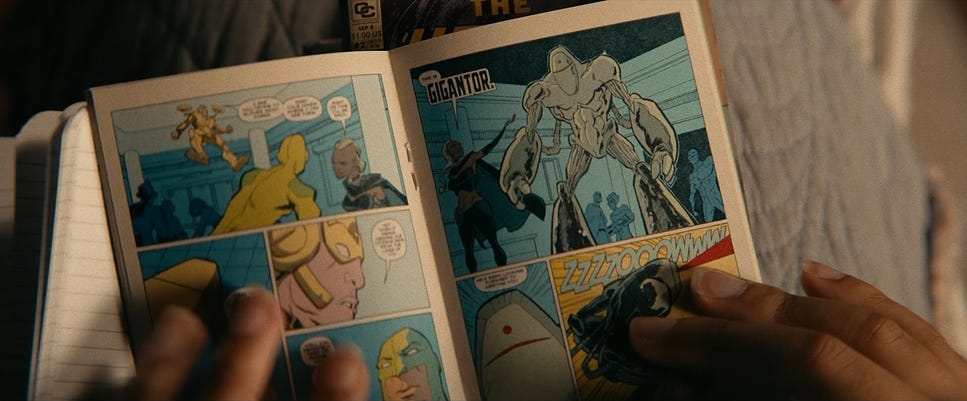
Comic artists, who work in sequential storytelling, stayed in the game. A single image is a deliverable. It lives or dies on immediate visual impact. AI cranks that stuff out fast and cheap.
A comic is a system.
Characters must look the same across panels. You need emotional continuity, escalation, rhythm, callbacks. Inconsistencies break reader trust. Current AI tools can’t handle that alignment.
I learned this crafting Lost, Alias, and Heroes. Each episode built on what came before while advancing meta-narrative. One mega moment meant nothing without sustained coherence across seasons.
Storytelling creates a moat. Not because it’s better art. Because it can’t be easily replicated.
Your work only needs to be cool once? AI’s a viable substitute.
Your work needs to hold together over time? AI remains a blunt instrument.
The Pros Are Hit Hardest
The biggest drop in creative activity wasn’t among beginners or hobbyists. It was the pros.
Top-tier creators reduced output more sharply than casuals. Commercial artists chasing subscriptions and commissions pulled back most. Bottom half of creators posted more after AI arrived.
Hobbyists create for expression, practice, community. They’re not competing for rent money or algorithmic oxygen.
Professionals rely on converting audience into income. When that pipeline breaks, continuing to post feels pointless.
This isn’t fear of AI as technology. It’s the collapse of predictable returns. Post-WGA Strike, with LA production down 40% and AI flooding the zone, professionals are making rational calculations about where to invest energy.
This Is an Attention Recession
Pixiv data shows a significant drop in bookmarks for human-made work after AI content flooded the platform. Not because human work got worse. Because it became harder to see.
AI didn’t just add competition. It diluted visibility.
Millions of new images appear overnight, discovery breaks. Monetization breaks, professionals stop showing up.
The attention recession hits hardest where output is most interchangeable.
What This Means for Scribblers
Content that holds up under AI saturation shares traits:
Sequential. Chapters, episodes, arcs, seasons. Value is cumulative. Each beat builds on the previous.
Consistent. Characters behave like themselves. Worlds follow rules. Your creative DNA should be unmistakable.
Momentum. Each piece creates anticipation for the next. Scene and Sequel at scale. Pull the audience forward.
Rewards memory. Callbacks, layered themes, character evolution. Storytelling where every detail lands somewhere.
Your creative output can be sampled once and fully understood? Vulnerable. Value rests on what came before and what comes next.
Practical Moves
Build continuity on purpose. Series bibles, recurring motifs, evolving relationships, visible consequences. Apply that discipline across installments.
Package as sequences. Make “next” part of the promise. Each piece functions standalone while contributing to something larger.
Choose your battlegrounds. Niche flooded with AI? Move toward spaces where voice, taste, coherence matter more than volume.
Own your audience. Newsletters, memberships, communities create insulation against algorithmic shocks. Direct relationships beat platform favor.
Use AI as scaffolding, not authorship. Research, variation, exploration. Keep continuity decisions human.
I’ve been collaborating with LLMs for over two years. Research assistants, brainstorming partners, organizational aids. But they can’t maintain character consistency across episodes. Can’t create emotional architecture that makes serialized storytelling function.
If I’m not rewriting at least a third of what comes back, I’m not doing my job. Continuity choices, callbacks, character-specific voice, structural integrity across sequences.
The Bottom Line
Generative AI isn’t evenly hostile to creativity. It’s hostile to commodity creativity.
Single interchangeable unit? You’ll feel it. System unfolding over time? More resilient.
For scribblers: Don’t compete on volume. Don’t compete on novelty alone. Compete on coherence.
Not a romantic stance. A structural one.
For the moment, structure is still a human advantage.