

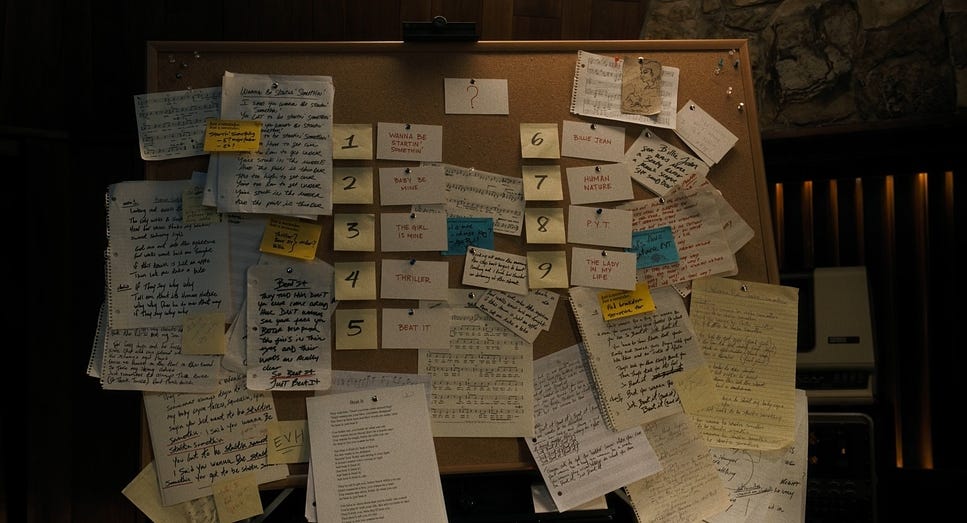
A corkboard built to hold pushpins and index cards now stocks itself. A shy scholar coded gentle in a design doc threatens violence out of nowhere because a language model got confident about the wrong sentence.
Three separate companies are shipping software called some version of Storyflow, and not one appears to know about the other two.
Three true stories. Same year, screen side and game side both.
Everybody’s Startup Is Named Storyflow
The debate over whether scribblers should touch AI tools ended sometime before this year started. One June field guide on the space put a number on it: by its count, only about 4% of working scribblers use AI to produce a piece start to finish.
Everybody else treats it like a research assistant, a fast reader, or a first-pass machine, useful for one stage of the job and nothing more.
What’s replaced that debate is a pile-up. Search “AI screenwriting tools” and you surface three unrelated products fighting over the same name.
Storyflow.so: an AI visual workspace pitched at novelists and scribblers.
Storyflow-ai.com: script-to-storyboard-to-video, a different company entirely.
StoryFlow Editor: built by a small studio called Soulstices, sold on Steam for branching game dialogue.
None share ownership. All three shipped in the same rough window. You can bet a scribbler doing five minutes of research picks the wrong one at least once.
The Page Side: Sudowrite and the Board
For the actual script, the working pattern splits the job in two. One tool holds story-world context, the treatment, the bible, the character sheets, all at once, and drafts prose inside that frame.
A second tool handles the format nobody wants to fight about, the sluglines, the margins, the industry-standard PDF a studio expects on delivery.
Sudowrite’s own 2026 pitch to scribblers draws that line directly: draft where the AI has full context, format elsewhere where precision matters, then hand the pages to Final Draft or Highland. Final Draft’s Beat Board, the software’s index-card corkboard, has been the industry’s go-to outline tool since long before any of this started.
It didn’t need AI to earn that spot. It’s picking up AI features now anyway.
One flag before the number: Sudowrite’s cited 92% completion-speed bump comes from the company’s own user survey. Company research, published on the company’s blog. Real names stand behind the product anyway.
Emmy winner Bernie Su uses it. Silo author Hugh Howey calls it “scary good.” Take a company’s read on its own product for exactly what it is.
The Room Side: Inworld and the Dead King
Game narrative runs the same split, with the second tool doing something screenwriting software never has to: keep a character in character after the player stops watching.
Inworld AI is the name every roundup lands on. The funding backs up the hype, more than a hundred million raised, advisors that include a Disney Imagineering SVP and the guy who coined the word “metaverse.”
Its Character Engine already turns up as fan-built mods inside Skyrim and Grand Theft Auto V, plus native support inside Unity, Unreal, Roblox, and Minecraft. Ninety-nine percent of the gamers in Inworld’s own “Future of NPCs” survey said smarter NPCs would improve the games they play. Same flag as Sudowrite’s number: that’s Inworld’s own research, about Inworld’s own space.
LoreWeaver built its entire pitch around a harder problem. In the company’s own words: “Large language models are fluent, not faithful. They generate what sounds right, not what is true in your world.”
Their list of failure modes reads like a lore bible’s nightmares. A dead king who keeps talking three scenes after you killed him. A shy scholar who threatens violence out of nowhere. Gods and wars invented on the spot because the model needed something to say.
Guard consequence like it’s the show’s currency, or somebody else spends it for you. Heroes lost the thread when memory and death stopped meaning anything. LoreWeaver’s engineers are chasing the game-narrative version of that same fix, and they put it in five words: “the model proposes, your rules dispose.”
The Model Proposes, Your Rules Dispose
Every roundup this year skips the part that decides whether any of this works: the stack is only as good as the rules you hand the second tool.
This column runs on that exact split.
Raw dictation goes in one end, notes, tangents, half a rule scribbled between takes. A structured brief sits on the other end holding the guardrails, the facts that can’t be invented, the words that don’t get used, the lexicon that turns every “writer” into a scribbler before it hits the page.
The AI drafts inside that frame the same way Storyflow drafts inside a series bible, the same way a Character Engine drafts inside its own rules about who a shy scholar is allowed to be. Different room. Same architecture. A project brief and a Character Brain are both just a corkboard with better memory.
Pick Two, Every Time
Every roundup this year admits the same limit. A format tool can’t tell you whether the scene works. A Character Engine can’t tell you whether the scholar had a reason to snap. Only a scribbler sitting in the room, screen side or game side, makes that call.
Two tools, sometimes three, depending on the day and the platform. One set of rules that doesn’t move no matter how fluent the draft sounds.
Pick your two. Guard your rules.