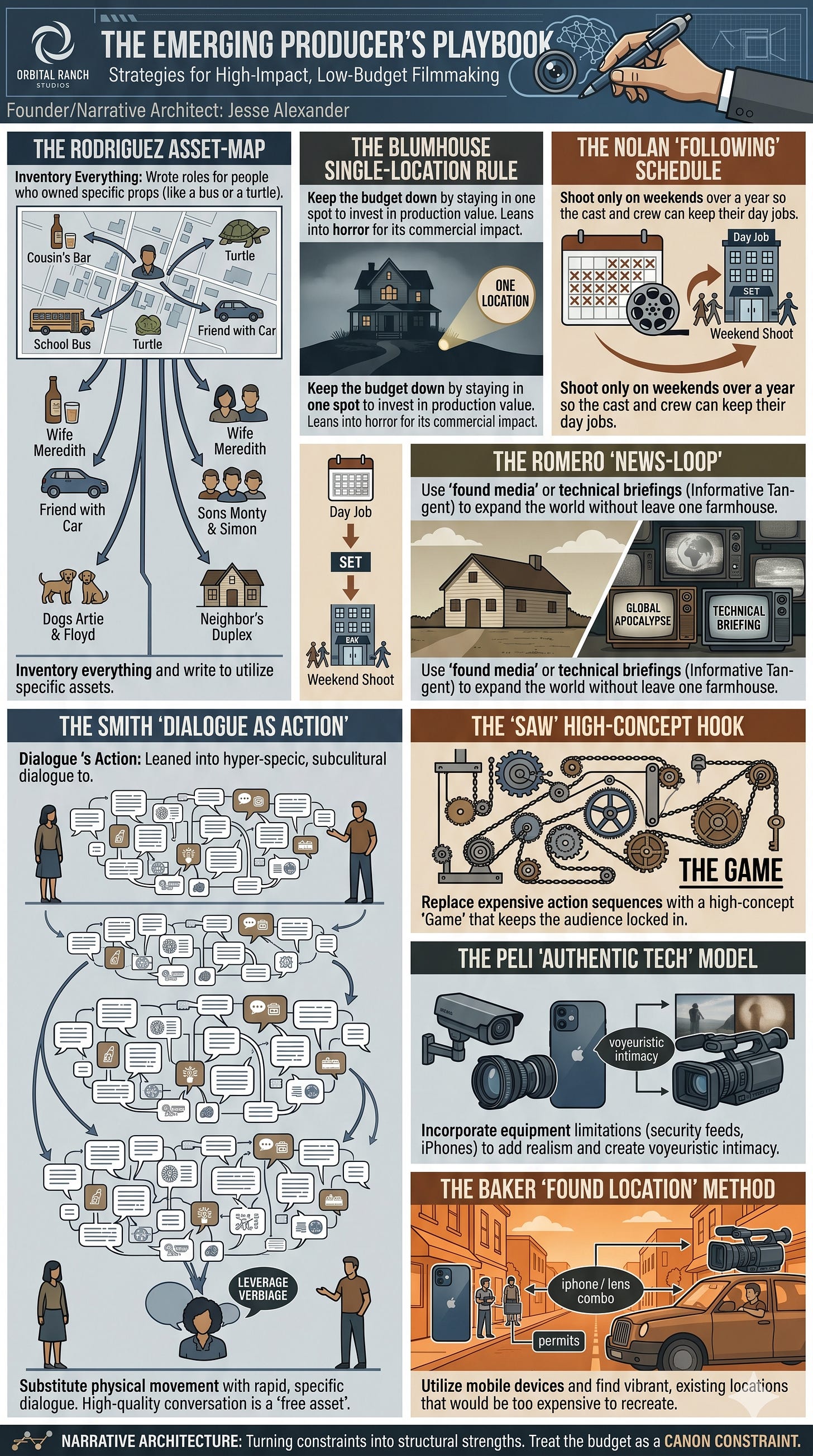
The Rodriguez “Asset-Map”
Before scribbling a single word, inventory every tangible resource you already possess.
The Model: Robert Rodriguez (El Mariachi) famously looked at what he had—a local bar, a school bus, a turtle, and friends. Then scribbled a script that required those specific elements.
The Context: Don’t scribble for what you want; but what you have. Your cousin owns a print shop? Set the climax in a print shop. This chops the cost of locations and prop acquisition.
The Blum “Single-Location Rule”
Contain the physical scope to expand the emotional stakes.
The Model: Jason Blum (Blumhouse) perfected the model of setting scary flicks in a single house or facility. Horror is a “commercial engine” because it relies on tension and spooky vibes that are often free vs. the expense of spectacle.
The Context: One location cuts “company moves,” which are the primary drain on a production’s time and budget. By staying in one spot, you can invest more time in lighting and performance.
Nolan’s “Weekend Schedule”
If you can’t afford a crew’s day rate, remove the need.
The Model: For his first film Following, Christopher Nolan shot only on Saturdays over a year. This allowed cast and crew to keep their jobs while still participating the project.
The Context: Time is the only resource that can occasionally substitute for money. Shooting “long and slow” allows for extreme prep and prevents the burnout of a typical low-budget shoot that’s all about the “sprint”.
The Romero “News-Loop” (Narrative Encapsulation)
Use “found media” to expand scale without building a thing.
The Model: In Night of the Living Dead, George Romero used grainy news broadcasts and technical radio briefings to explain a global apocalypse while the actors remained in one farmhouse.
The Context: By cutting to a “technical briefing” or a “security feed,” you provide the audience with world-building that would otherwise require thousands of extras or CGI bucks.
The Smith “Dialogue as Action”
When you can’t afford movement, invest in rhythm.
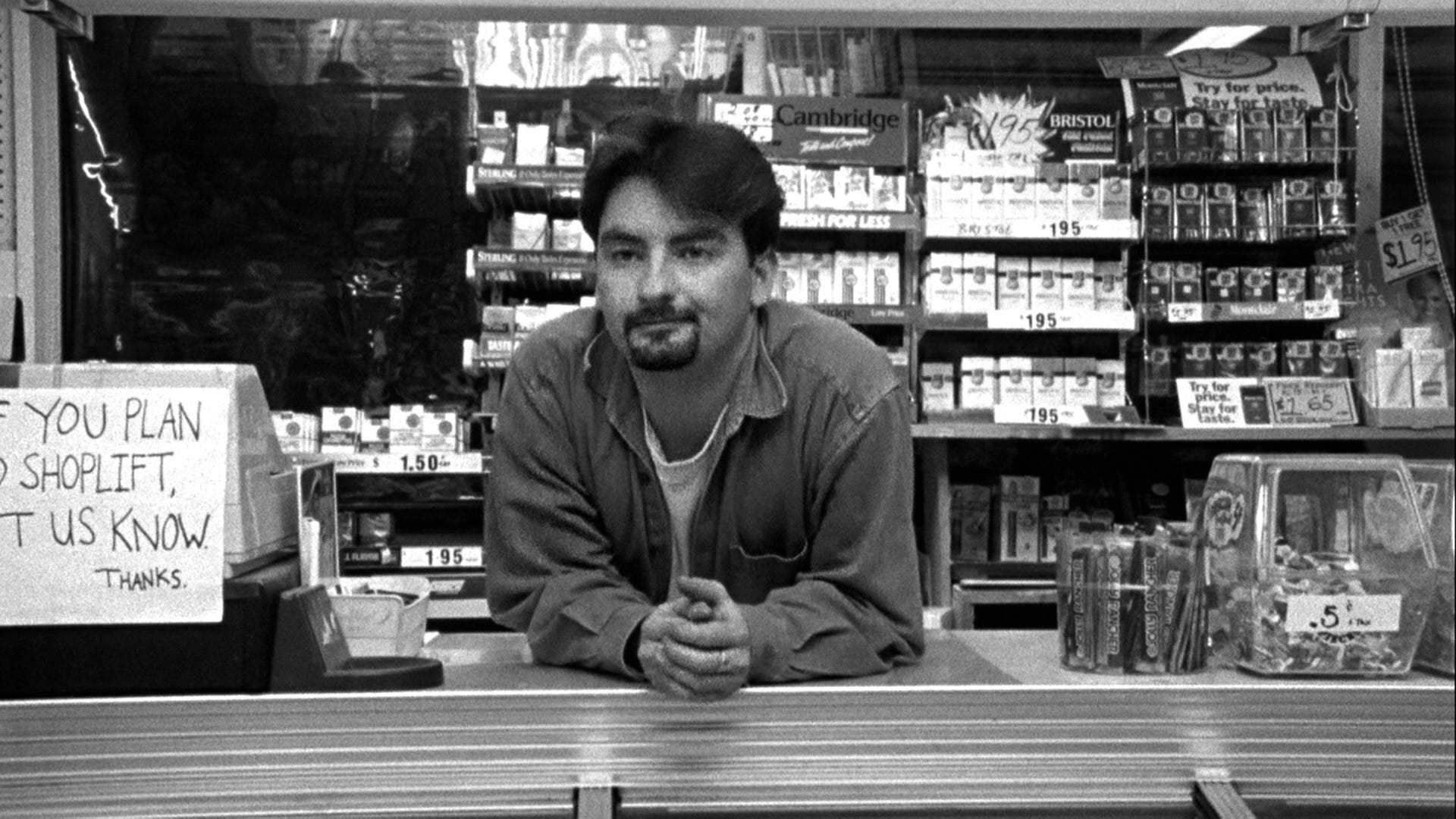
The Model: Kevin Smith (Clerks) shot in the store where he worked. Since the visual arena was static, he leaned into hyper-specific, subcultural dialogue to keep the audience engaged.
The Context: High-quality dialogue is a “free asset.” If the conversation is compelling, the audience will forget they’ve been looking at the same four walls for ninety minutes.
Wan & Whannell’s “Psychological Hook”
Substitute physical action for a high-concept “Game.”
The Model: Saw began as two people trapped in a room with a tape recorder. The “spectacle” wasn’t a car chase; it was the psychological puzzle they had to solve to survive.
The Context: A strong “hook” creates a promise to the audience. If the central mystery or game is strong enough, the “production value” becomes the solution to that mystery rather than visual effects.
The Peli “Authentic Tech” Model
Make the limitations of your equipment part of the story’s DNA.
The Model: Oren Peli (Paranormal Activity) turned a home security camera into the protagonist. Because the story was about being watched by a static camera, the low-resolution footage became a “feature” that added realism.
The Context: Instead of trying to make cheap gear look expensive, lean into the “look” of that gear (security feeds, iPhones, body cams) to create a sense of voyeuristic intimacy.